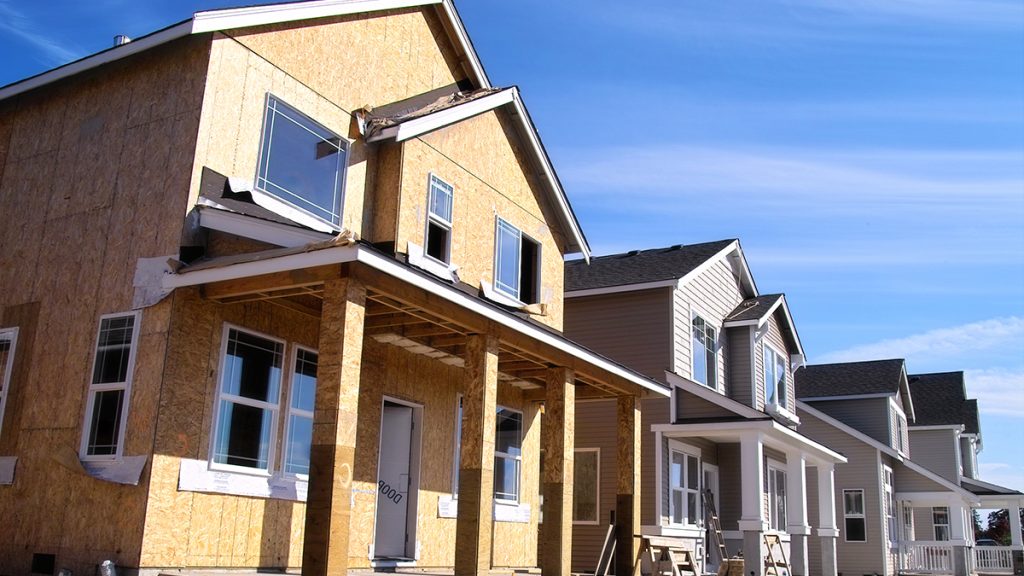
First-time buyers of new construction homes in Canada will now be able to access longer mortgage amortization periods.
As of August 1st, 2024, lenders will be allowed to offer 30-year amortizations for insured mortgages to first-time homebuyers of new construction homes, a measure modified by the federal government. Previously, the maximum amortization for an insured mortgage — a mortgage that has a down payment less than 20% and therefore requires mortgage insurance — was 25 years. Homes priced at and over $1 million automatically require a 20% downpayment and an uninsured mortgage loan.
The federal government says that by spreading payments out over an additional five years, this will help to lower monthly mortgage payments, therefore making housing costs more affordable for young Canadians, in addition to incentivizing the construction of much-needed supply.
“For every young Canadian who wants to own a home of their own, we want them to be able to qualify for a mortgage and afford their first home. One of the biggest hurdles to homeownership for younger Canadians is qualifying for a mortgage and affording the monthly payments,” said Chrystia Freeland, Deputy Prime Minister and Minister of Finance, in a press release. “That is why, starting August 1, first-time buyers of new builds will be able to reduce their monthly payments with up to 30 year mortgages. This is just one of the many new measures our government is taking to make the dream of homeownership a reality for younger Canadians.”
What do I need to qualify for a new build 30-year amortization?
If you’re a first-time buyer shopping for a new construction home and plan to take out a 30-year mortgage, here are some of the requirements you’ll need to keep in mind.
At least one of the borrowers on the application must be a first-time homebuyer – they’ve never purchased a home before, and they have not occupied a home as a principal residence that either they or their current spouse or common-law partner have owed in the last four years
The home being purchased must be newly-constructed, meaning it has not been previously occupied for residential purposes
Only high-ratio mortgages will be applicable — mortgages were the loan amount exceeds 80% of the home price (has a down payment less than 20%)
All other eligibility criteria for government-guaranteed mortgage insurance will still apply
Thirty-year amortizations for insured, new build mortgages were first announced in the 2024 federal budget released earlier this year, alongside other affordable housing measures. Read more about all of the proposed housing measures here.
You can learn almost anything online these days, from installing shelving to refinishing a table, but when it comes to selling your home, the stakes are far higher than any weekend DIY project. Your home is likely the largest financial asset you’ll ever own, and navigating the selling process without expert support can mean leaving
Quebec’s recreational real estate markets show no signs of slowing
2025, december 02
Not unlike the province’s residential market, homes near Quebec’s popular ski hills recorded an increase in sales and price appreciation this year, despite economic uncertainty Housing markets across Quebec have been bucking national trends all year, and the province’s recreational real estate regions are no exception. Driven by steady demand and tight inventory, as well
Retirement and real estate in Quebec: Stay put or downsize?
2025, may 28
Royal LePage survey offers new insights into the home ownership trends of retirees Nowadays, owning a home is a challenge – and paying off your mortgage in full is an even greater one – especially when you consider the continuing rise in property prices, exacerbated by the increased demand for real estate resulting from the
To deliver the best experiences, we use technologies such as cookies to store and/or access device information. Consenting to these technologies will allow us to process data such as browsing behavior or unique IDs on this site. Failure to consent or withdrawal of consent may adversely affect certain features and functions.
Functional
Always active
Storage or technical access is strictly necessary for the legitimate purpose of enabling the use of a specific service explicitly requested by the subscriber or user, or for the sole purpose of carrying out the transmission of a communication over an electronic communications network.
Préférences
Le stockage ou l’accès technique est nécessaire dans la finalité d’intérêt légitime de stocker des préférences qui ne sont pas demandées par l’abonné ou l’utilisateur.
Statistics
Le stockage ou l’accès technique qui est utilisé exclusivement à des fins statistiques.Storage or technical access that is used exclusively for statistical purposes.
Marketing
Storage or technical access is necessary to create user profiles in order to send advertisements, or to track the user on a website or on several websites with similar marketing purposes.